Skip to content
    chevron design overlay on image
    Foundations · Introductory

    Cyber Operator Introductory Course

    Build the operator foundation that every k>fivefour pipeline starts from, with self-paced modules on Red, Blue, and Purple Teaming, networking, Windows, Active Directory, Linux, and remote access tools.

    Course Overview

    The Cyber Operator Introductory Course is a self-paced, on-demand program that gives you the baseline knowledge to succeed in the Red Team Apprentice Course (RTAC) and Blue Team Apprentice Course (BTAC). Across nine modules, you'll learn Red, Blue, and Purple Team concepts alongside the networking, operating system, Windows, Active Directory, Linux, and remote access tool fundamentals that real operations depend on. Topics are framed around how operators actually use them, with knowledge checks, quizzes, and assignments throughout, culminating in a 100-question final exam.


    COURSE OUTCOMES

    What You'll Learn

    COIC sets the lexicon and the technical foundation for operators, covering how attackers and defenders think and the systems, networks, and tools both sides work with every day.


    Red Teaming Concepts: Rules of engagement, deconfliction, and the k>fivefour Red Team methodology, from mission preparation through mission objectives, and what separates a Red Team assessment from a penetration test.
    Blue Teaming Concepts: SOC operations, cyber threat intelligence, SIEM, and threat hunting, with incidents classified in MITRE ATT&CK and worked through the NIST SP 800-61 lifecycle and alert triage.
    Purple Teaming Concepts: How Red and Blue Teams collaborate to find and fix vulnerabilities, using MITRE D3FEND to turn findings straight into countermeasures.
    Networking Fundamentals: MAC and IP addressing, ARP, subnetting, NAT, TCP and UDP, ports and services, firewalls, and DNS, with packet analysis in Wireshark.
    SSH Tunneling & Redirectors: Local, dynamic, and remote port forwarding, and how operators use them to reach internal services and build redirectors.
    Operating Systems & Behaviors: Key differences between Windows and Linux, including command line conventions, privileged users, groups, file systems, and paths.
    Windows Fundamentals: cmd.exe and PowerShell, permissions, processes, services, the registry, and Windows authentication, with spotlights on the persistence and credential techniques attackers use.
    Active Directory Fundamentals: Domains, trees, forests, and trusts, plus Group Policy, OUs, LDAP, Kerberos, and SMB, and how attackers abuse them.
    Linux & Remote Access Tools: The Linux file system, shell, permissions, and sudo, along with RAT and C2 fundamentals using Cobalt Strike beacons, listeners, and team servers.
    AdobeStock_287190262

    COURSE OUTCOMES

    What You'll Learn

    COIC sets the lexicon and the technical foundation for operators, covering how attackers and defenders think and the systems, networks, and tools both sides work with every day.


    Register Today

    COURSE STRUCTURE

    Inside This Course

    COIC is fully self-paced across nine modules, with knowledge checks, quizzes, and hands-on assignments that unlock your progress along the way. Explore how the course is structured, how you'll learn, and where it leads.


    chevron design overlay on image

    What k>fivefour Students Are Saying

    “This isn't content built in a vacuum. It was developed by Red Teamers, based on techniques that actually worked on real DoW assessments against real DoW networks. That's what sets k>fivefour apart.”

    Jeff U.

    DoW Red Team Operator

    “As my first time using Cobalt Strike and performing Red Teaming activities, I really appreciated how the course followed a realistic scenario, from phishing through to gaining full control of a network. It made the experience very engaging and helped me clearly understand the power of the tools used throughout.”

    Alejandro M.

    Commercial Red Team Operator

    “As someone with a red team background, I appreciated that it baselines people on the core concepts and on Cobalt Strike, the most common C2 tooling out there, while still resurfacing fundamentals even experienced operators forget. The DoW Certified Red Team (DCRT) approved logging methodology alone was one of the most valuable parts, and it's something every red team should be doing.”

    Austin S.

    DoW Red Team Operator

    “The multi-level tunneling work stood out as the most valuable part for our future operations. The difficulty is genuinely high, but that is exactly what makes it worth doing.”

    RTJC Student

    Allied Partner Force

    “I came in with more than a decade of offensive security experience on Linux, likely well ahead of the typical student, and k>fivefour still stood out. They build the course the way a real Red Team assessment works, grounded in capability proven on live networks.”

    Jeff U.

    DoW Red Team Operator

    “I expected surface-level material and got the opposite. It goes deep on high-level Linux exploitation, starts you on the fundamentals, then ramps up fast. The hands-on labs and writing up my own work are what made it stick, and the 9-hour final in a real-world lab environment made me prove I actually understood it.”

    Rusty R.

    DoW Red Team Operator

    “I came in a little skeptical about how much could be covered in such a short amount of time, but the content was delivered really well. I was very impressed by the coverage of lateral movement, persistence, and getting a feel for how to move around an enterprise network.”

    Logan H.

    DoW Red Team Operator

    “My first real exposure to Red Team operations, and one of the most insightful courses I've taken. Seeing privilege escalation, lateral movement, and domain migration in a realistic scenario gave me a real understanding of the Red Team mindset. The two-instructor format kept the perspectives diverse and the pace engaging throughout. ”

    Cyber Operator

    Allied Ministry of Defense

    “Great course with amazing instructors!! Huge shoutout to Matt and Noel!! They presented the material super well and made the concepts easy for someone like me, with zero Red Team experience, to understand and apply. Would highly recommend this course!”

    Sean H.

    DoW Red Team Operator

    BEFORE YOU ENROLL

    Frequently Asked Questions

    Answers to the questions we hear most often about k>fivefour training, from prerequisites and delivery format to what the certificate exam involves. If your question isn't covered here, reach out and our team will help.


    Why choose k>fivefour?

    Our courses are built, updated, and taught by operators who actively perform this work, not by trainers reading from a script. The tradecraft you learn reflects how adversaries operate today and evolves as threats change. You’ll spend most of your time working hands-on in realistic environments, so you finish mission-ready with skills you can apply immediately.

    What is Battlegrounds?

    Battlegrounds is the k>fivefour training platform, where you access on-demand courses, hands-on labs, and realistic cyber environments, and track your progress in one place. For teams, Battlegrounds lets an organization manager assign seats, set start dates, and monitor each operator’s progress. Learn more here.

    Can exams be taken virtually?

    Yes. For most k>fivefour exams, you’ll need a webcam and a modern web browser, and you must allow our proctors to record your screen and webcam throughout the exam. The Cyber Operator Introductory Course (COIC) final exam is the exception: you’ll only need a modern web browser, no webcam required. Additional information about the proctoring process is provided during each course.

    Can I earn CPE credits for k>fivefour courses?

    Yes. You’ll receive a letter of completion for every k>fivefour course you complete. The letter will include the course name, completion date, and credit hours.

    What do the Apprentice, Journeyman, and Master levels mean?

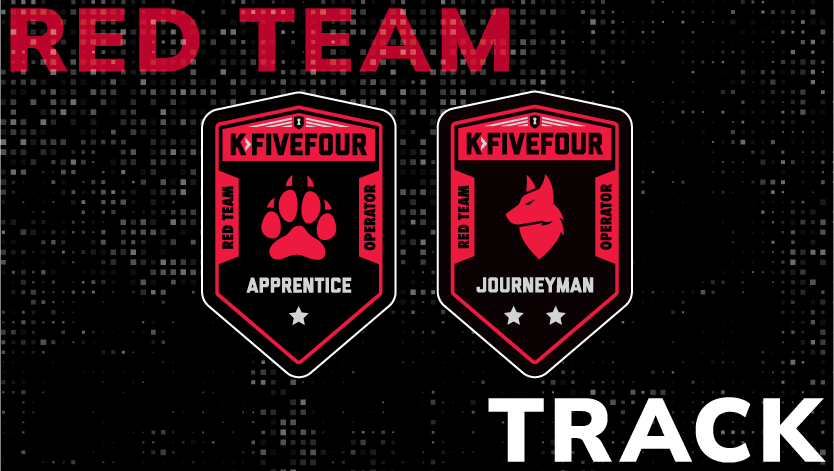
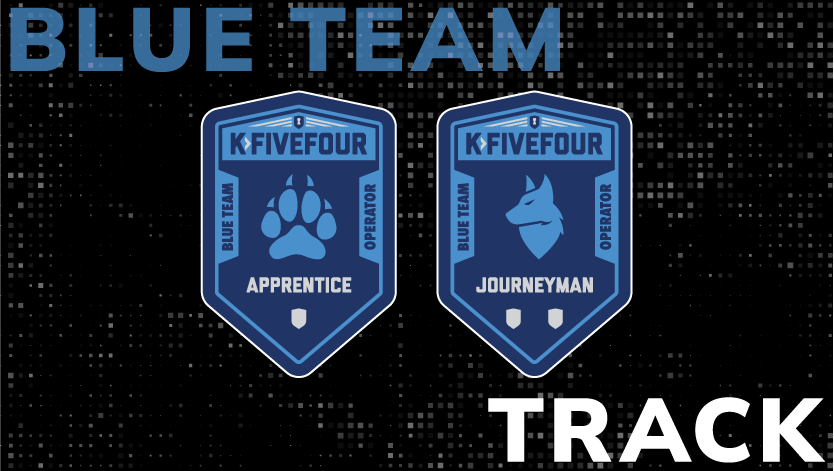
    These levels represent increasing depth and operational maturity. Apprentice courses build the core methodology and skills for a discipline, while Journeyman courses develop independent, operator-level tradecraft. Specialization courses provide advanced training in a specific domain, such as Linux and Unix exploitation or cyber operations forensics.

    Where can I purchase courses or Battlegrounds subscriptions by credit card?

    You can purchase training courses and Battlegrounds subscriptions directly through our website.

    Do your courses include a certificate?

    With the exception of COIC, every course concludes with a hands-on practical exam. Students who pass earn a k>fivefour certificate for that course. COIC students receive a certificate after passing an exam with more than 100 questions.

    What equipment do I need for the courses?

    You’ll need a laptop capable of connecting to a remote lab environment and a reliable internet connection. Hands-on labs are completed in a fully provisioned virtual environment that we provide. You’ll also need a webcam for proctored exams, except for the Cyber Operator Introductory Course (COIC), which only requires a computer, a modern web browser, and an internet connection.

    Which course should I take first?

    If you’re new to the field, start with the Cyber Operator Introductory Course (COIC), a self-paced foundations course that prepares you for our apprentice-level courses. If you already have some experience, you can go straight to the Red Team Apprentice Course for offensive skills or the Blue Team Apprentice Course for defensive skills. Journeyman, specialization, and leadership courses build on that foundation. If you’re unsure, contact us and we’ll help you choose.

    What's the difference between the Red Team and Blue Team tracks?

    The Red Team track teaches offensive operations, including how to emulate real-world adversaries to identify and exploit weaknesses. The Blue Team track teaches defensive operations, including how to detect, hunt, and respond to those same threats. Many students train across both tracks to build a purple, cross-domain skill set.

    Not sure which course fits where you are, or need to set up training for a team? Our team can help you choose the right path and answer anything the FAQs didn't cover. Reach out and we'll point you in the right direction.

    Still Have Questions?

    Our team is here to help you find the right training for your mission.